


Sumac or Tree of Heaven? How to Tell Them Apart

| Feature | Staghorn sumac – Rhus typhina | Tree of heaven – Ailanthus altissima |
|---|---|---|
| Leaflet edges | Serrated | Mostly smooth, with a few distinctive glandular teeth near the base |
| Young shoots | Noticeably hairy and velvety | Usually not densely velvety |
| Seeds / berries | Dense, reddish, upright berry clusters | Winged seeds (samaras) in large clusters |
| Smell | Not a key ID feature | Can give off a strong, unpleasant smell when damaged |
| Growth form | Usually a small tree or large shrub | Can grow into a large tree |
| Scientific name | Rhus typhina | Ailanthus altissima |
Sumac or tree of heaven? The key differences
The two trees can look alike at first glance, but botanically the names aren't interchangeable. In Hungary, tree of heaven is often called “wild sumac” in everyday speech, so the name alone won't always tell you which plant you're dealing with. To be sure, check the plant's physical features.
Here are the features that help you tell them apart in the field.
Start with the leaf edges
Both species have large compound leaves with leaflets lined up along a central stem, so from a distance they can look a lot alike. Up close, the edges of the leaflets are one of the most useful clues.
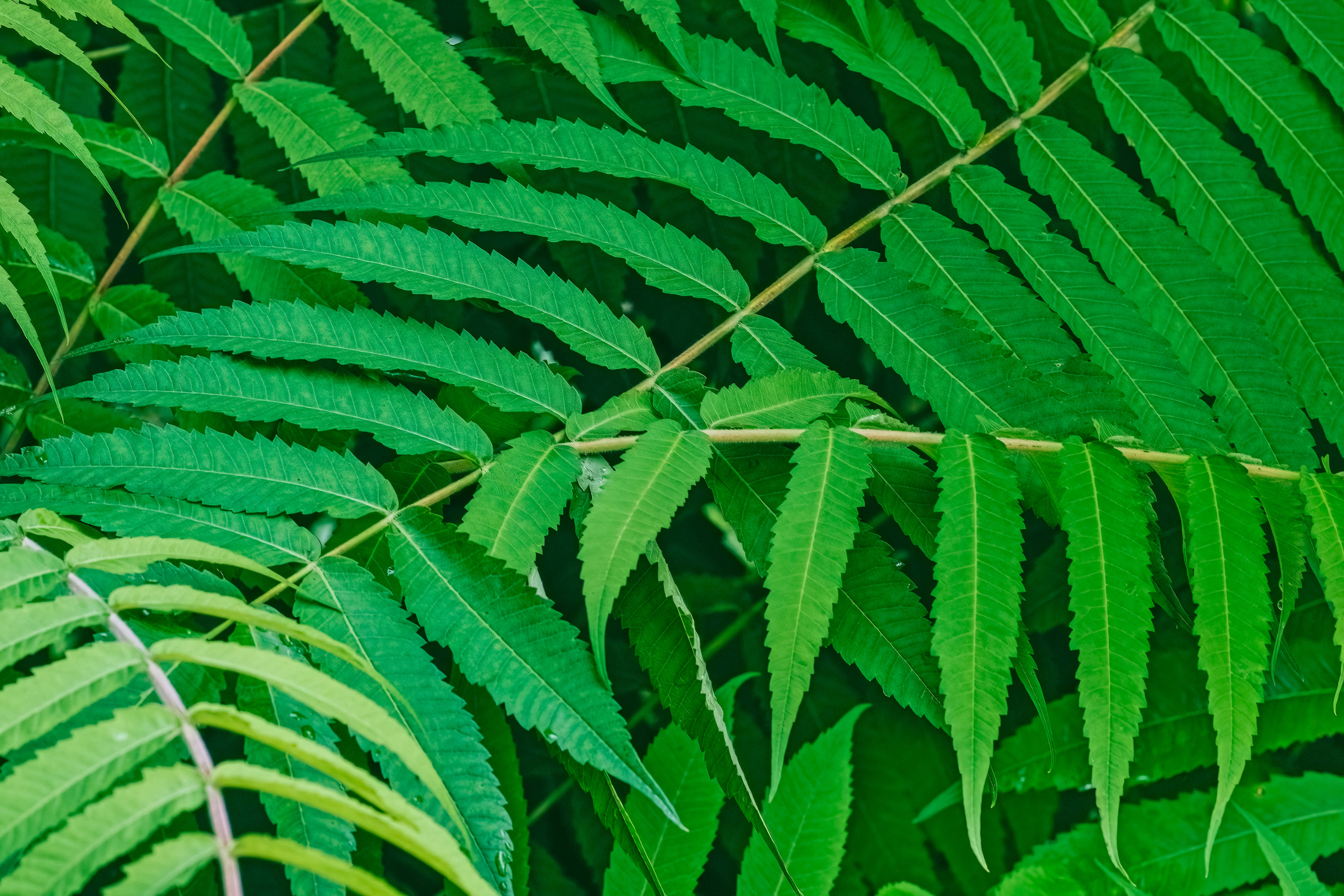
Sumac leaflets have clearly serrated, toothed edges. Tree of heaven leaflets are mostly smooth. Tree of heaven leaves can be 40–60 cm long, and although the leaflet edges are mostly smooth, there are a few distinctive glandular teeth near the base of each leaflet.
A quick note on terms: when we say “leaf” here, we mean the whole compound leaf. The individual parts along it are the leaflets. Many people mistake the leaflets for separate leaves.
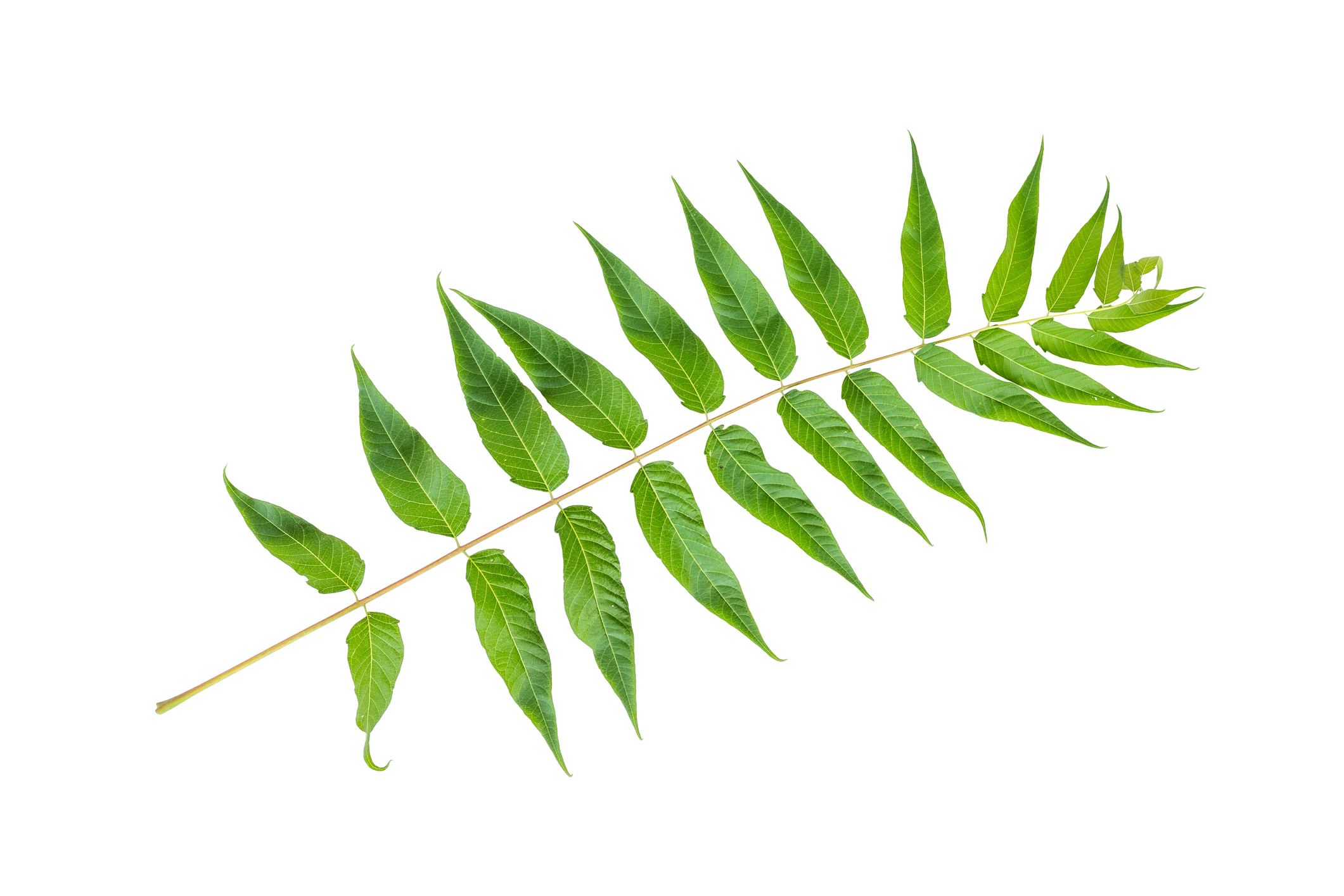
Hairy young shoots are a giveaway
The next useful clue is the surface of the young shoots. Sumac shoots are noticeably hairy, covered in reddish-brown, velvety fuzz. That's where the name “staghorn sumac” comes from: the young shoots look like the velvet on a deer's antlers.
Tree of heaven shoots don't have this dense, velvety coat. So if the young shoots look fuzzy and hairy, you can relax a little. It's most likely a sumac.
The seeds make the difference even clearer
If the plant has seeds or berries on it, the difference is especially easy to see. Sumac has dense, red, fuzzy berry clusters that usually point upward. Their shape and color alone are enough to tell sumac apart from tree of heaven.
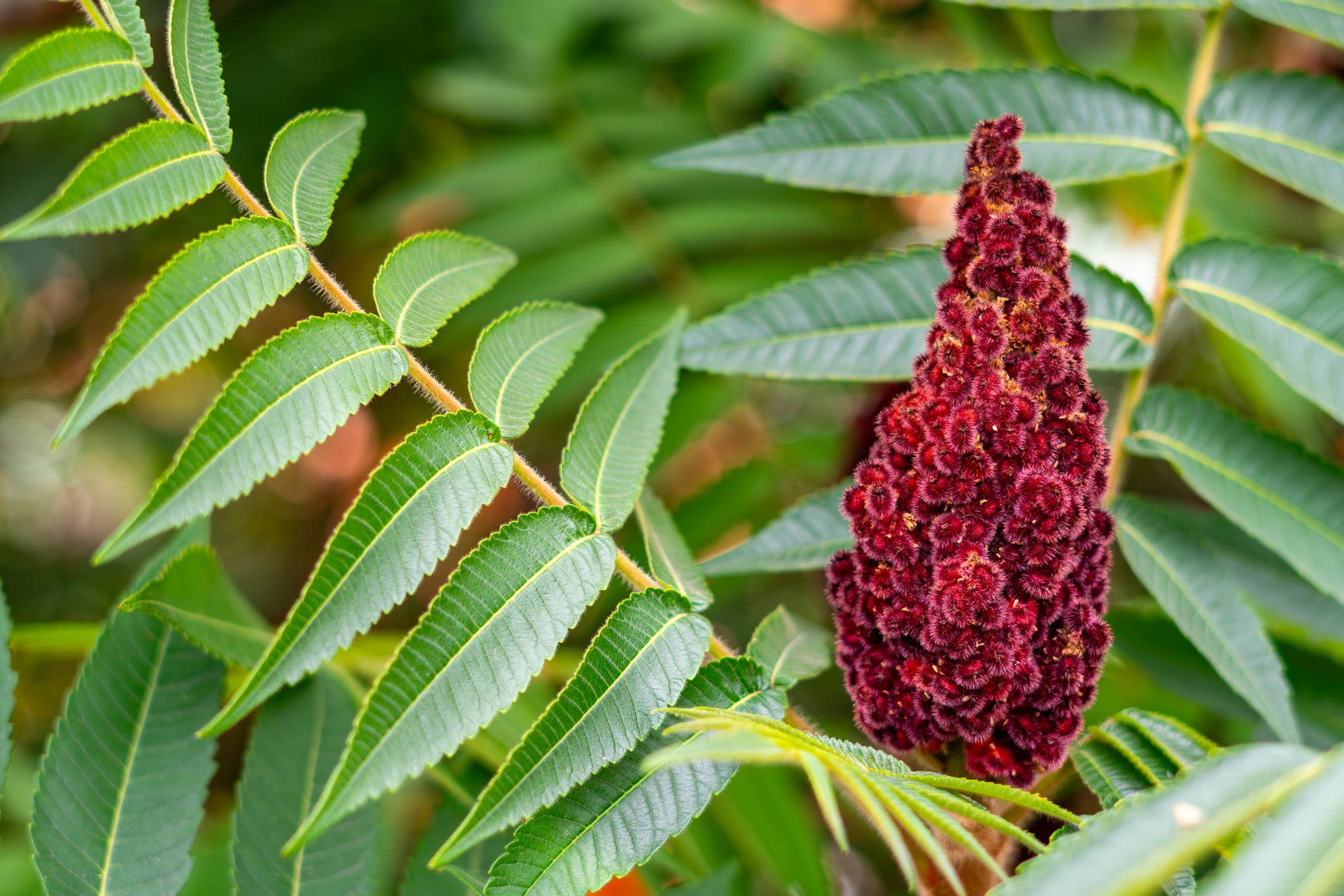
Tree of heaven produces winged seeds called samaras, often in large clusters. They're flat and have a distinctive shape, so they look nothing like sumac's dense red berry clusters. If the plant has seeds or berries on it, their shape, color and arrangement are a strong clue.
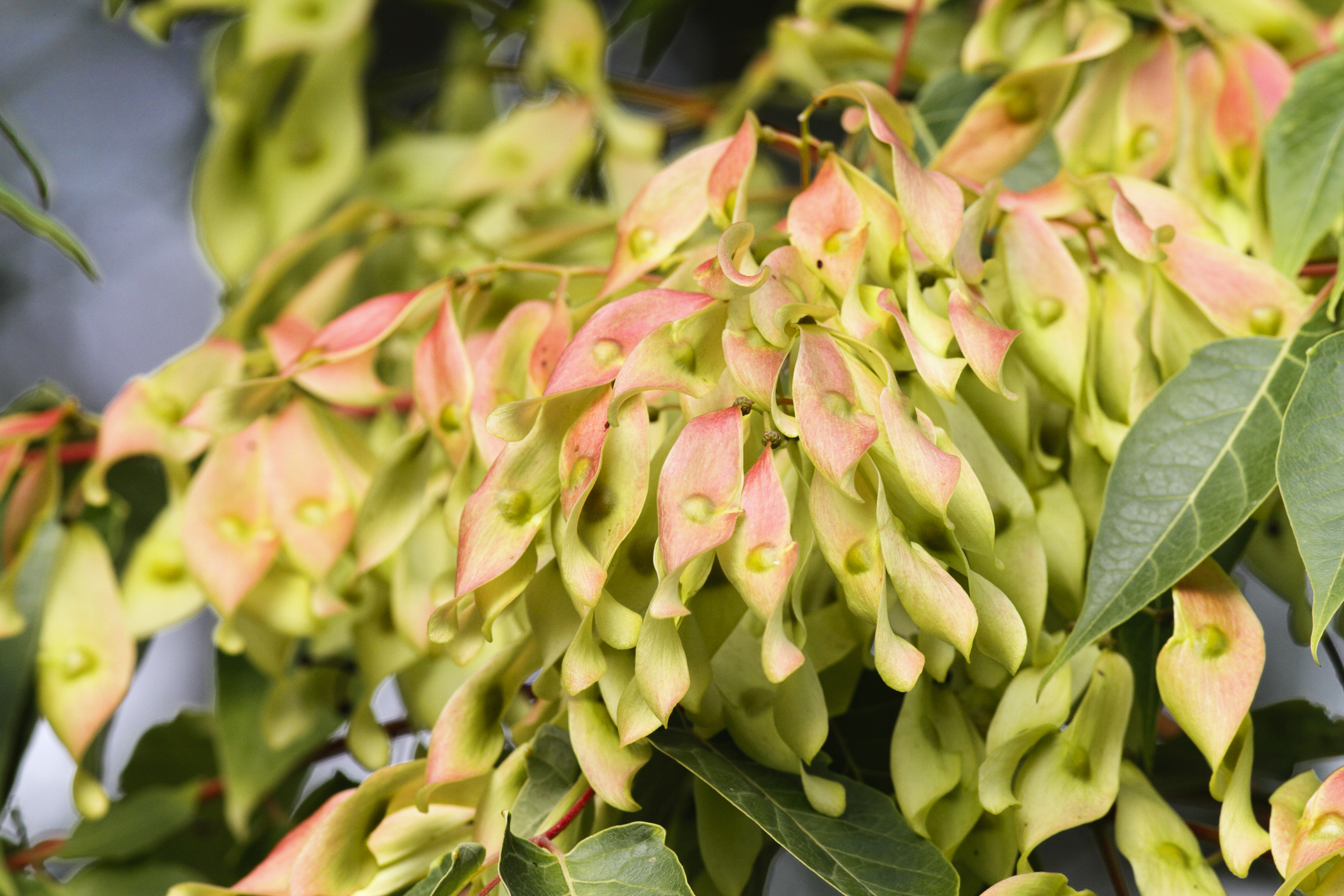
In practice, the seeds and berries are one of the most reliable ways to tell the two apart. Dense, reddish, mostly upright berry clusters point to sumac. Large clusters of flat, winged seeds point to tree of heaven.
Size and shape can help, but aren't enough on their own
Staghorn sumac is usually smaller. It's often shrubby or has several trunks, and it grows to about 6–7 meters. Tree of heaven is much bigger and can reach 20–25 meters.
Size is only a supporting clue, though. With young plants or root suckers you can't rely on it, so look at it together with the leaves, the shoots and the seeds or berries if there are any.
The smell can help too
When you crush or damage tree of heaven leaves or shoots, they give off a distinctive smell that many people find unpleasant, a bit like cat pee. So if your hands smell like a litter box after touching the plant, there's a good chance you're dealing with an invasive tree. Still, don't rely on smell alone. Check the leaves and shoots as well.
Can you tell them apart in winter, without leaves?
Yes, but it's harder without the leaves, so look at several features at once. On tree of heaven, look for thick shoots, large distinctive leaf scars and spongy pith. Female trees often keep their winged seeds well into winter, which also helps.
On sumac, look for the typical hairy young branches and any reddish berry clusters still on the plant. In winter it's especially important not to decide based on a single feature. If you're not sure, check the plant again during the growing season, or ask an expert.
Why does it matter whether it's sumac or tree of heaven?
Getting the ID right matters in practice, because the two species are managed differently. Tree of heaven (Ailanthus altissima) is on the EU's current list of invasive alien species of Union concern. In Hungary, Annex 2 of Government Decree 282/2024 (IX. 30.) lists both Ailanthus altissima and Rhus typhina as invasive woody plants.
That's why you shouldn't go with your first impression. Always check the leaves, shoots, seeds and berries, and in winter the features listed above.
If you'd like to learn more about why tree of heaven is such a problem, how it spreads and why it's so hard to get rid of, read our full guide to tree of heaven.
Don't be fooled by the resemblance!
Sumac and tree of heaven do look alike, but you can tell them apart by checking a few simple features together. If you need a quick ID, look at the leaflet edges first, then the young shoots, then the seeds or berries if there are any. In large forests or dense stands where it's hard to see what's growing, though, it can also be worth mapping the whole area rather than identifying trees one by one. In cases like this, a drone survey can help you map where tree of heaven is growing.

 Phone number:
 Email:
 Address: